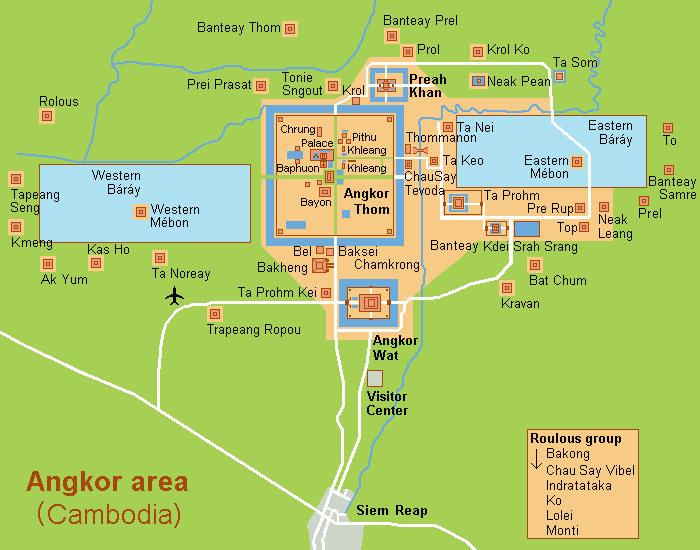
לולאה הגיונית עם כיוון השעון מאנגקור וואט דרך העיר המוקפת חומה אנגקור תום אל טא פרוהם ובאנטאיי קדיי, במעבר בין המקדשים ובחקירת כל אחד ברגל.
מקטעים
-
אנגקור וואט בזריחההשדרה המערבית ← מגדלי המרכז של אנגקור וואט
שדרת אבן ואולמות
הגיעו בחשכה וצפו בחמשת מגדלי ניצן־הלוטוס של אנגקור וואט מושחרים על רקע הזריחה, משתקפים בבריכת המים. נבנה בראשית המאה ה־12 בידי סוריאוארמן השני כמקדש הינדי לוישנו, והוא המונומנט הדתי הגדול בעולם. הקצו כ־90 דקות עם אולמות תבליטי האבן המגולפים.
על המקום הזה
אנגקור וואט הוא המקדש המרכזי בעיר המקדשים העתיקה אנגקור שבקמבודיה. המקדש נבנה במאה ה-12 והוא הגדול והשמור ביותר באנגקור והיחיד שנשאר כמרכז דתי. אנגקור ואט נבנה במקור כמקדש הינדי ונועד לייצג את הר מרו המיתולוגי, מקום משכנם של האלים. המקדש שינה את אופיו לבודהיסטי בשלב מאוחר יותר. כיום, המקדש נחשב לייצוג שיאה של התרבות והארכיטקטורה הקמרית ודמות המקדש מיוצגת במרכז הדגל הקמבודי. אנגקור ואט והמקדשים האחרים באנגקור מהווים את מרכז המשיכה של תיירים למדינה, והם עומדים במוקדו של מאמץ שימור בינלאומי.
קראו עוד בוויקיפדיהצילום: Bjørn Christian Tørrissen · CC BY-SA 4.0
-
השער הדרומי של אנגקור תוםאנגקור וואט ← השער הדרומי של אנגקור תום
כביש ושדרת אבן
עברו אל העיר הגדולה המוקפת חומה אנגקור תום, בכניסה דרך השער הדרומי המונומנטלי שלה, ששדרתו מוקפת שורות של אלים ושדים האוחזים בנחש ענק. הבירה האחרונה של אימפריית החְמֶר, שנבנתה בידי ג'איאוארמן השביעי. כ־30 דקות.
על המקום הזה
אנגקור תום או אנגקור ת'ום הוא מיקומה של הבירה העתיקה של ממלכת אנגקור הקדומה.
קראו עוד בוויקיפדיהצילום: This Photo was taken by Supanut Arunoprayote. Feel free to use any of my images, but please mention me as the author and · CC BY 4.0
- הבאיון והפנים שלו
השער הדרומי ← הבאיון
מדרגות מקדש ומרפסות
בדיוק במרכז אנגקור תום ניצב הבאיון, שמגדליו מגולפים ביותר ממאתיים פני אבן ענקיות ושלוות שכמו צופות בכם מכל זווית. התבוננו בתבליטים החיים של חיי היומיום של החְמֶר סביב הבסיס. כ־60 דקות.
על המקום הזה
The Bayon is a richly decorated Theravada Buddhist temple of the Khmer Empire located at Angkor in Cambodia. Built in the late 12th or early 13th century as the state temple of King Jayavarman VII, it stands at the centre of Jayavarman’s capital city, Angkor Thom . The Bayon reflects the strong Buddhist orientation of Jayavarman VII’s reign. Originally conceived as a Mahayana Buddhist monument centered on the cult of the Bodhisattva of compassion, the temple later adapted to the spread of Theravada Buddhism in Cambodia. Its iconography, spatial organization, and emphasis on compassion and kingship illustrate the close relationship between Buddhism and royal authority at Angkor, while its continued use as a Buddhist sanctuary demonstrates the enduring influence of Buddhism in the region.
קראו עוד בוויקיפדיהצילום: Diego Delso · CC BY-SA 3.0
-
באפואון והמרפסות המלכותיותהבאיון ← מרפסת הפילים
שדרה מוגבהת ומרפסות
לכו צפונה אל מקדש־הפירמידה באפואון ואל מתחם הארמון פימאנקאס, ואז לאורך מרפסת הפילים ומרפסת מלך המצורעים, יציעי העיר המלכותית העתיקה. כ־45 דקות.
על המקום הזה
The Baphuon is a Buddhist temple at Angkor, Cambodia. It is located in Angkor Thom, northwest of the Bayon. Also called "golden mountain" (svarnādrī), the Baphuon is built on an artificial hill. The temple was originally dedicated to Shiva and late converted to a Theravada Buddhist temple. The dating of the temple has been fractious; recent work has shown that it was not built during the reign of Udayādityavarman II, as is popularly reported. In 2015 a French team directly dates four iron crampons integrated into the structure using the AMS Carbon-14 method, revealed the construction was much earlier than thought and can now be considered as the major temple associated with Suryavarman I (1010–1050CE), a ruler which had no temple previously associated with his reign.
קראו עוד בוויקיפדיהצילום: Marcin Konsek · CC BY-SA 4.0
-
טא פרוהם, מקדש הג'ונגלאנגקור תום ← טא פרוהם
שבילי יער והריסות
החורבה האטמוספרית ביותר באנגקור, שהושארה במכוון באחיזת היער: שורשי עצי כותנה־משי ופיקוס חונק ענקיים נשפכים על אולמות מתמוטטים. מנזר בודהיסטי שבנה ג'איאוארמן השביעי לכבוד אמו, ומקדש 'שודדת הקברים'. כ־75 דקות.
על המקום הזה
Ta Prohm is the modern name of a temple near the city of Siem Reap, Cambodia, approximately one kilometre east of Angkor Thom and on the southern edge of the East Baray. It was built in the Bayon style largely in the late 12th century and early 13th century and was originally called Rajavihara. It was founded by the Khmer King Jayavarman VII as a Mahayana Buddhist monastery and center of learning dedicated to his mother. Almost 80,000 people were required to maintain or attend at the temple, including over 2,700 officials and 615 dancers.
קראו עוד בוויקיפדיהצילום: This Photo was taken by Supanut Arunoprayote. Feel free to use any of my images, but please mention me as the author and · CC BY 4.0
- באנטאיי קדיי וסרה סראנג
טא פרוהם ← סרה סראנג
שבילי מקדש וחוף הבריכה
סיימו במנזר הבודהיסטי המשתרע והשקט באנטאיי קדיי, ואז חצו את הכביש אל סרה סראנג, בריכת הרחצה המלכותית, משטח מים רגוע ומקום נאה לחתום בו את המעגל. כ־60 דקות.
על המקום הזה
Banteay Kdei, also known as "Citadel of Monks' cells", is a Buddhist temple in Angkor, Cambodia. It is located southeast of Ta Prohm and east of Angkor Thom. Built in the mid-12th to early 13th centuries AD during the reign of Jayavarman VII, it is in the Bayon architectural style, similar in plan to Ta Prohm and Preah Khan, but less complex and smaller. Its structures are contained within two successive enclosure walls, and consist of two concentric galleries from which emerge towers, preceded to the east by a cloister.
קראו עוד בוויקיפדיהצילום: Diego Delso · CC BY-SA 3.0
תגובות
התחברו כדי להצטרף לשיחה.
אין עדיין תגובות — היו הראשונים.